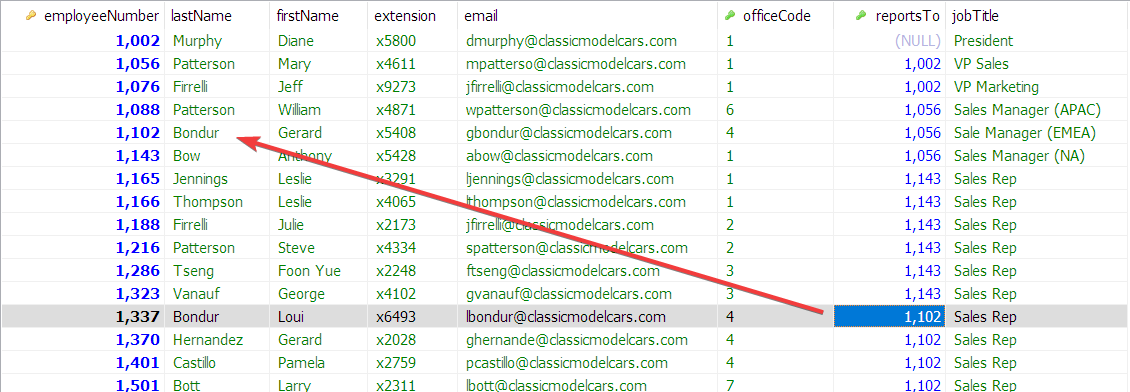
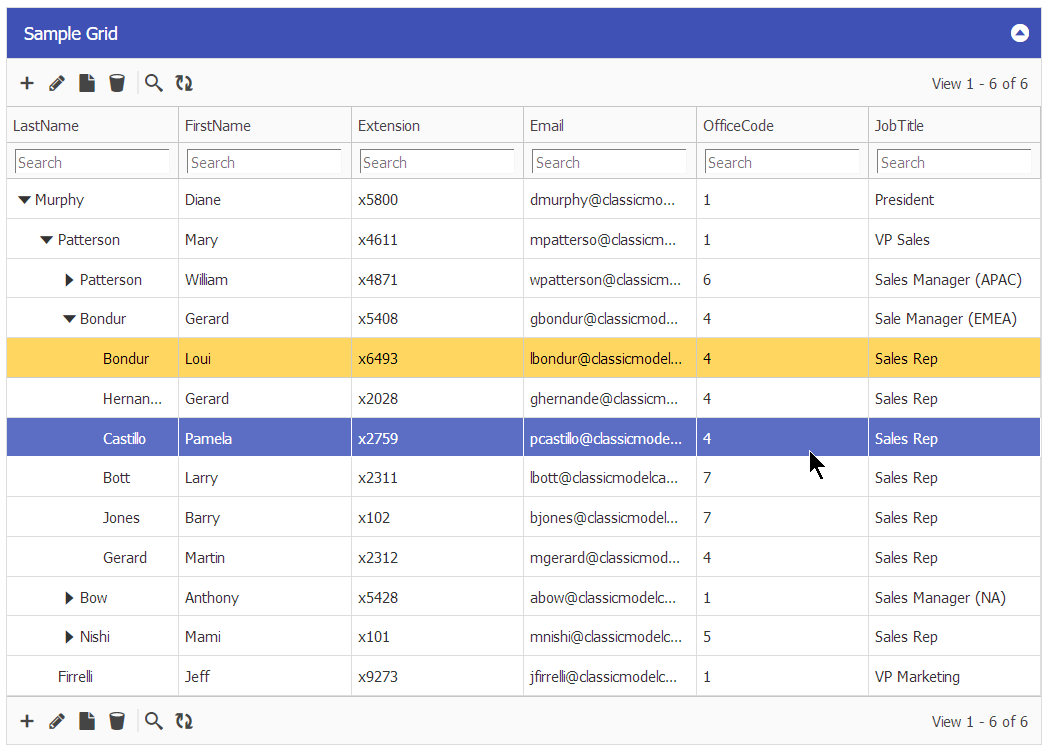
Added a demo that shows how to link lookup datagrid with your dialog form.
Review screencast for more details.
Screencast:
Active license customers can request upgrade using this link.
To purchase license, you can visit this link.
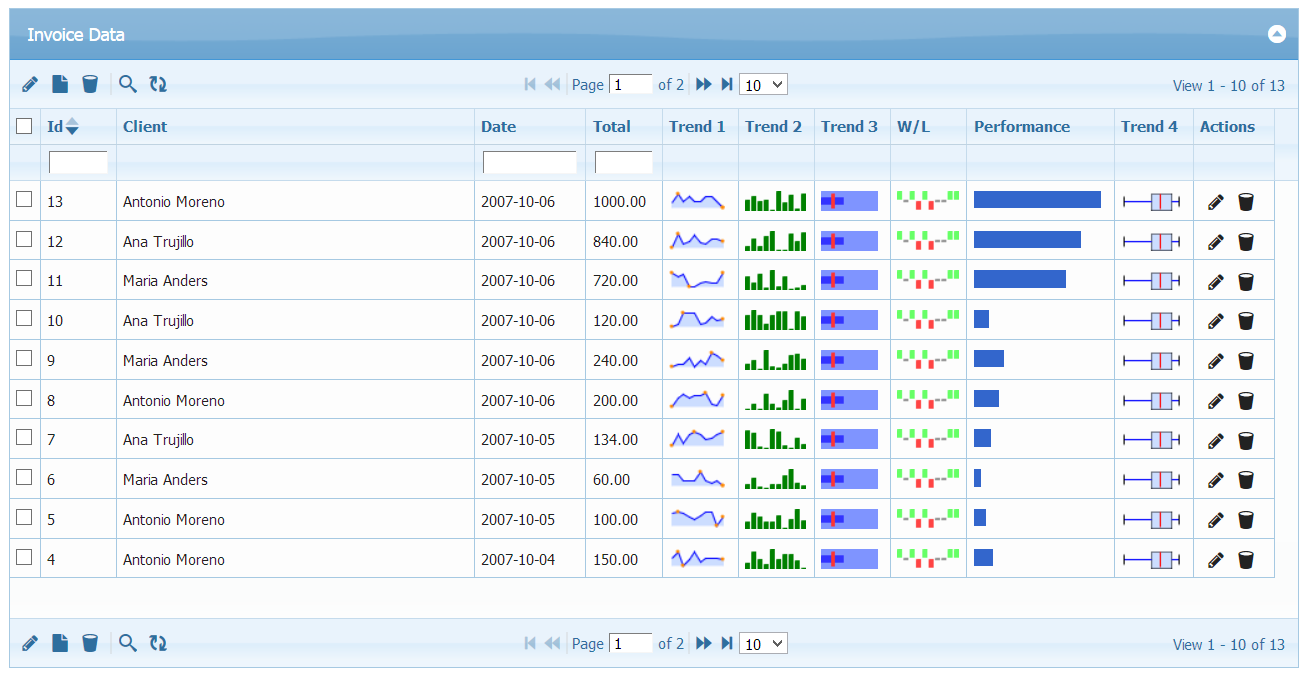
We’ve added support for visual representation of data using Sparklines in PHP Grid Framework. Sparklines charts can be used to show trends in a series of values, such as seasonal increases or decreases, website traffic, economic cycles, or to highlight maximum and minimum values.

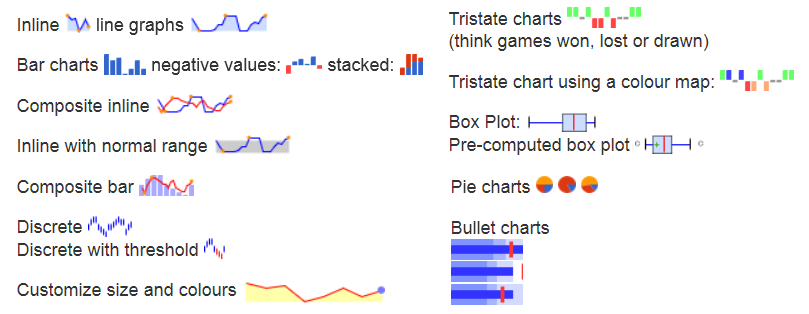
Now you can have Line, Bar, Composite (Both line/bar), Pie, Discrete, Bullet, Won-Lost, Color Map and Box Sparklines along with your other information. Few of them are shown in demo screenshot:

Licensed customers can request free upgrade using update link.
To purchase license, you can visit this link.

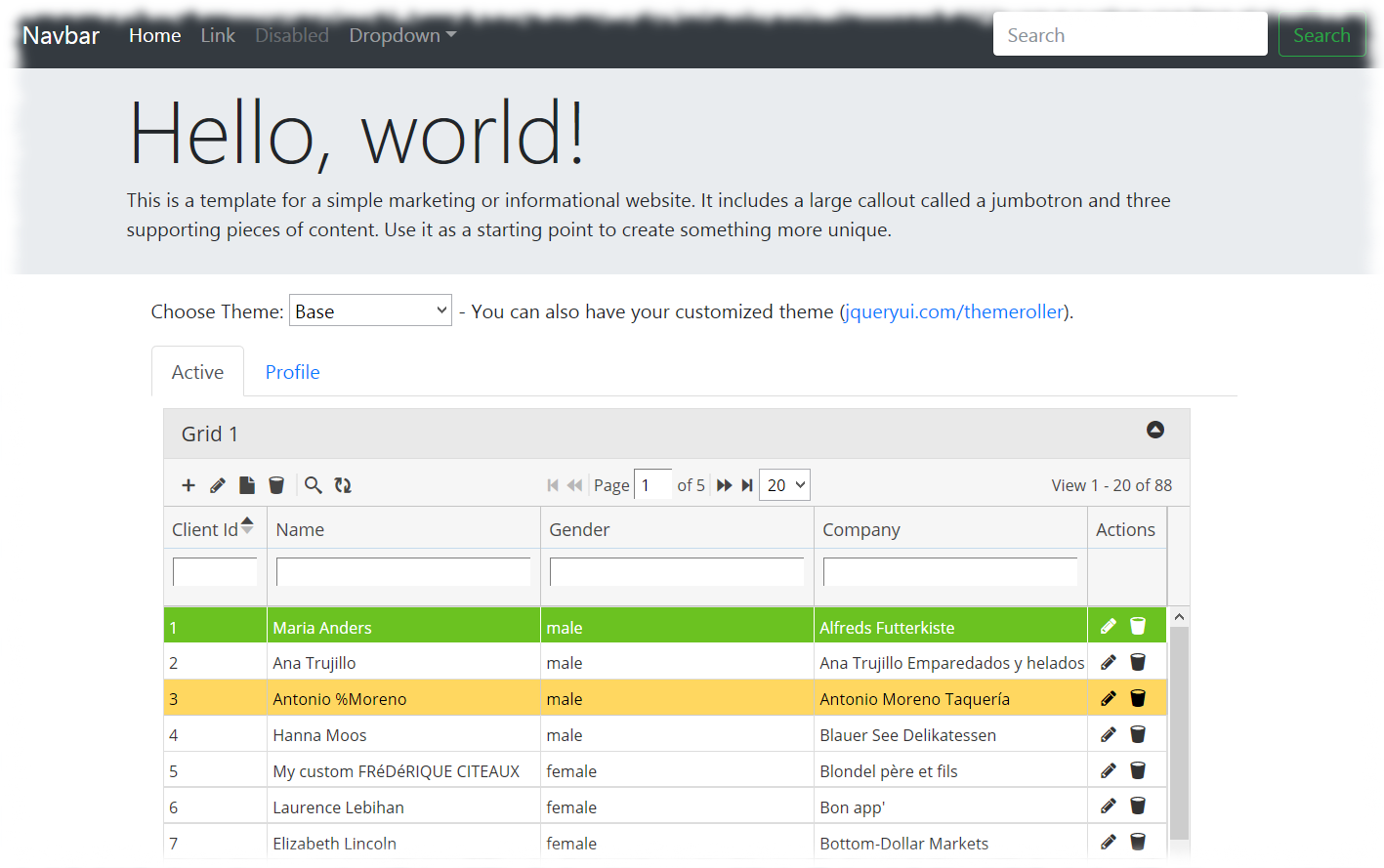
PHP Grid Framework is ready to use with Bootstrap4. Roll-out your next web-application with combining power of responsive PHP Grid and Bootstrap4 UI design.

Licensed customers can request free upgrade using update link.
To purchase license, you can visit this link.
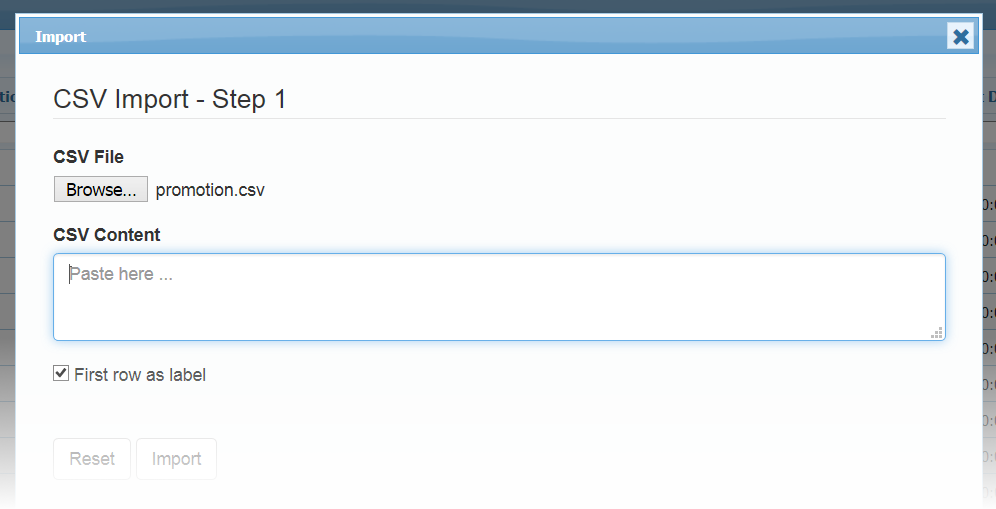
We’ve released ‘Import Data’ feature that will help customers who need to migrate from Microsoft Excel or Google Sheets or CSV File to their own web based solution using PHP Grid Framework.
– Import your external CSV file data in PHP Grid Framework.
– Migrating from Excel or Google Sheets to PHP Grid Framework.
– Selection to map imported data columns on database fields.
– Allow to Append OR Replace existing PHP Grid data.
Screencast below:
For How-tos, usage and technical details, refer updated documentation.
Existing customers can request update from this link.
To purchase license, you can visit this link.
After a long delay, we have enhanced responsive feature of PHP Grid, which support some really useful intrinsic features:
– Your custom column display selection based on screen size
– Auto-hiding of columns (from end) based on screen size
– Column display choice on runtime
– Better mobile transposed display of View, Add and Edit dialog forms
Screencast #1
Screencast #2
For How-tos, usage and technical details, refer updated documentation.
Active license customers can request free upgrade using this link.
NOTE: For more complete version, Visit Laravel 5.5 Integration Guide.
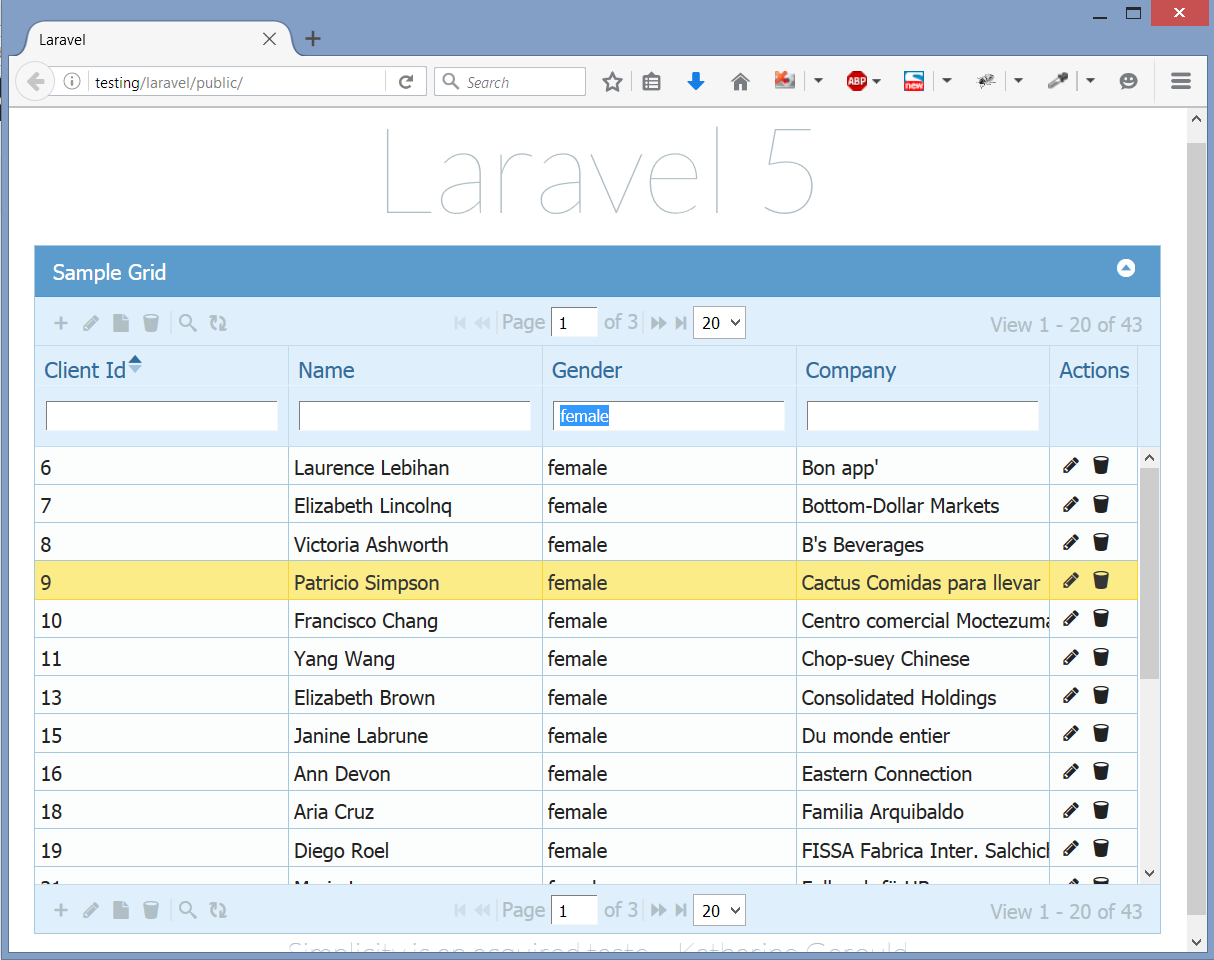
Following is the guide to integrate PHP Grid Framework with Laravel 5.

Step1: Folder placements in Laravel.
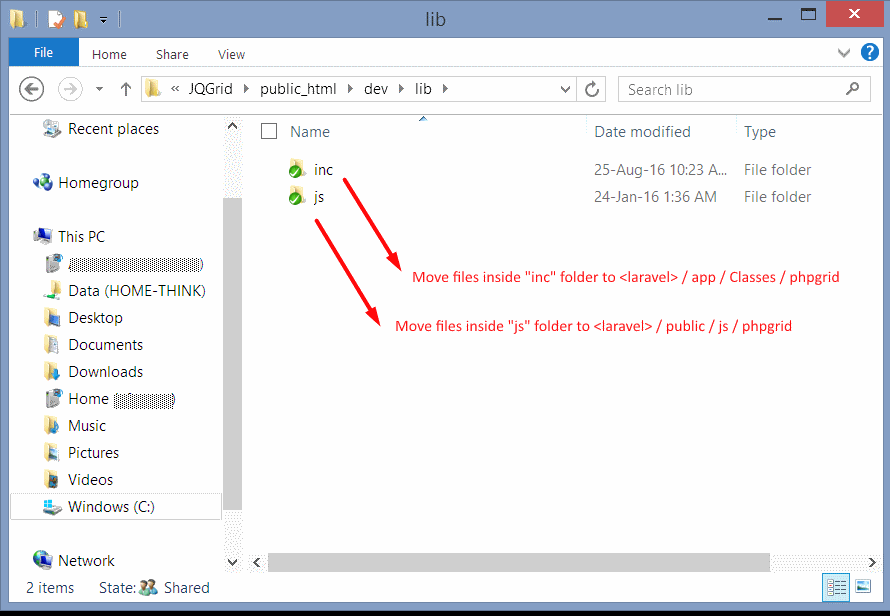
There are 2 main folders in PHP Grid Framework package archive. You need to:
Copy the contents of lib/inc folder —> Laravel/app/Classes/phpgrid
Copy the contents of lib/js folder —> Laravel/js/phpgrid

The ‘app/Classes’ folder does not exist by default in laravel. You may create it for 3rd party class libraries.
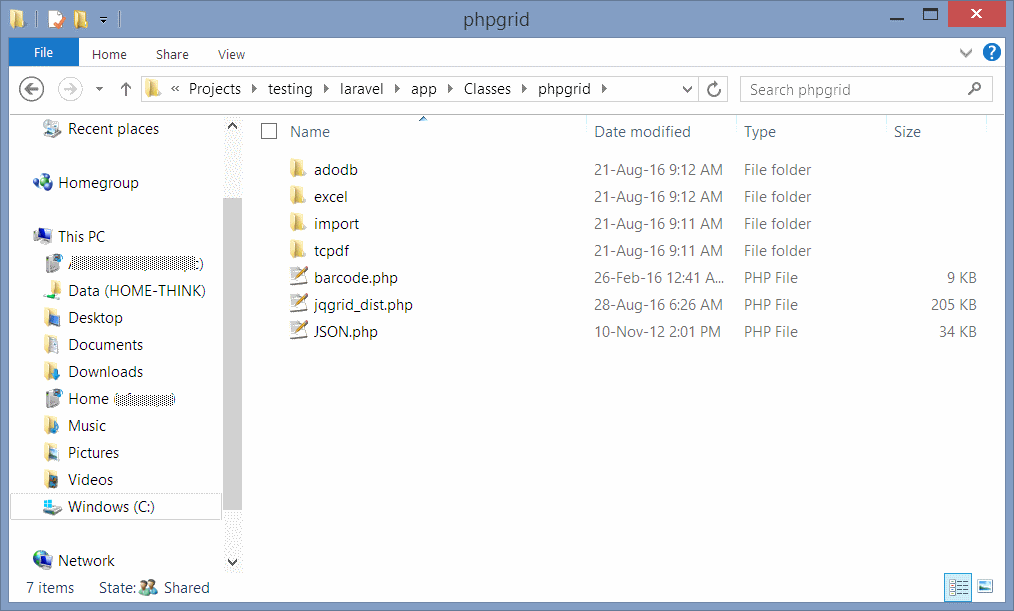
Create another folder inside it with name ‘phpgrid’ and move all contents of ‘lib/inc’ in it. Final result will look like this:

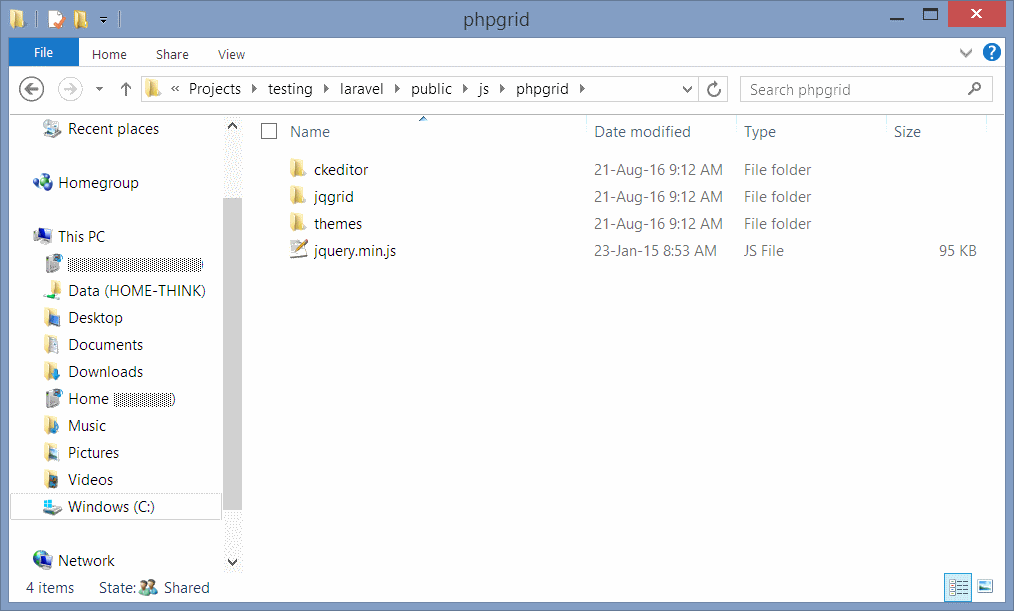
In similar way, copy the files from lib/js to laravel/public/js/phpgrid. Final result should look like following:

Step2: Setting Controller code.
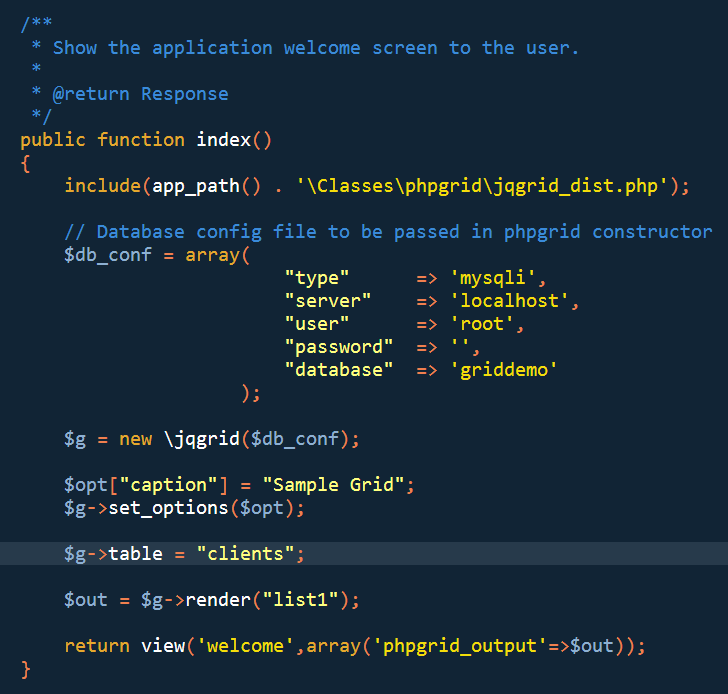
Here we included our library and rest code looks same as in our demos. Note the ‘\’ before class name while instantiating object. Finally we passed the output of render() function to view with a variable name ‘phpgrid_output’.
For demo purpose, we modified ‘laravel/app/Http/Controllers/WelcomeController.php’

Step2: Setting View code.
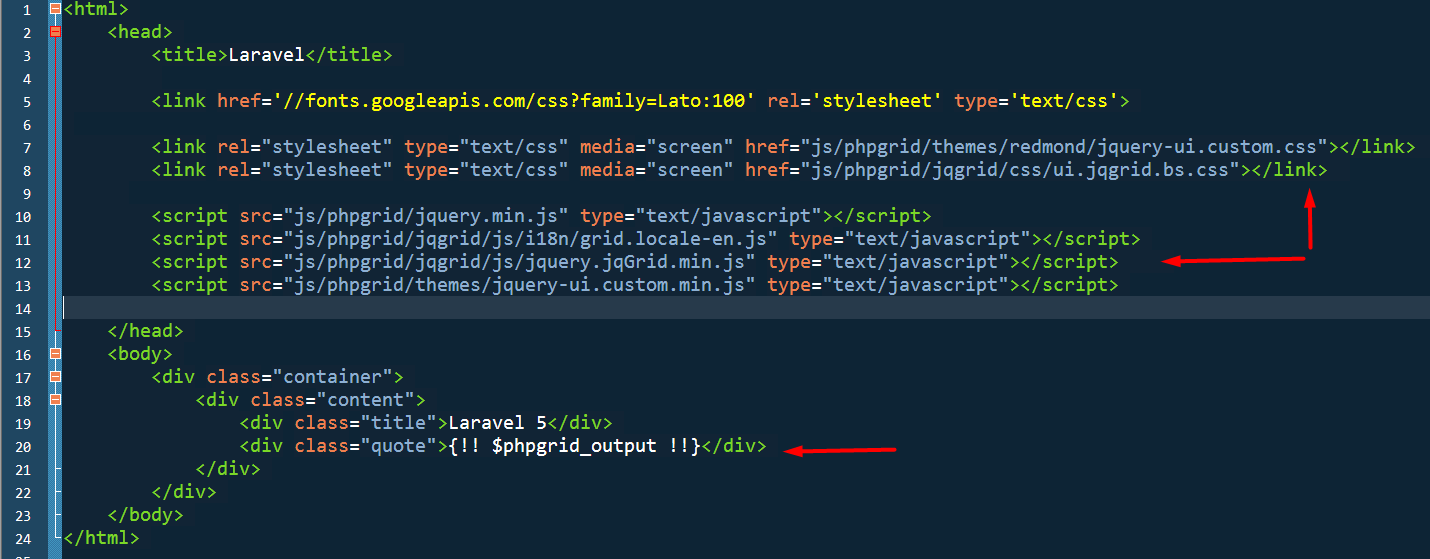
In view code, we included the JS/CSS files from the ‘js’ folder which we copied in step1.1
And using blade template variable output, we pushed the grid output in our desired place in html.
For demo purpose, we modified ‘laravel/resources/views/welcome.blade.php’

Note: PHP Grid Framework does not utilize ORM model layer of Laravel. It uses it’s own backend libraries.
Result: Get Set – Go!

Download all files to kick-start Laravel 5 with PHP Grid Framework.
Note: Demo comes with non-commercial / evaluation version of php grid framework. You can buy commercial usage license from this link.
We have recently added support for date-range picker control. Now you can filter date ranges (date-from and date-to) using quick search auto-filter. You can also filter with defined presets like last month, last week etc. See screencast for demo.
Active license customers can request free upgrade using this link.
Sometime we need custom Add or Edit forms for data entry purpose. With this feature it’s now doable to connect your HTML Forms with PHP Grid and it will use PHP Grid API for add/edit operations. See Screencast for more.
Active license customers can request free upgrade using this link.
In today’s fast-paced development environment, developers and administrators often need instant access to database tables without the overhead of writing full CRUD (Create, Read, Update, Delete) modules. Whether you work with MySQL, SQL Server, Oracle, PostgreSQL (PgSQL), or DB2, PHP Grid offers a lightweight and powerful solution. With just a few configuration steps, you can access and edit your database tables directly within your existing PHP application.

The PHP Grid Database Editor is designed for simplicity and efficiency. Instead of building complex modules for add, edit, delete, and search operations, you can get a fully functional database grid by setting the $g->table attribute to your selected database table.
Example code:
Access Control (ACL)
Exporting data (PDF, CSV, XLS)
Bulk editing with multi-selection
Grid persistence (column resizing, filters, sorting)
The demo above is based on MySQL, but the same code works seamlessly with MS SQL Server, Oracle, PgSQL, and DB2 databases.
CDN-based CSS/JS files for faster page loading
Hide or show specific columns
Select tables and fields for editing at runtime
Bulk editing and multi-selection support
Grid persistence (resizing, filtering, sorting)
Free and licensed versions available: Connect to MySQL, SQL Server, Oracle, PgSQL, and DB2 databases, with the licensed version offering advanced integration features
Q: What is PHP Grid?
A: PHP Grid is a lightweight PHP-based database editor that allows developers and administrators to view, edit, and manage database tables without writing full CRUD modules. It supports MySQL, SQL Server, Oracle, PostgreSQL, and DB2.
Q: Who uses PHP Grid?
A: PHP developers, database administrators, and software teams who need fast and easy database management within PHP applications use PHP Grid. It is ideal for internal admin panels, dashboards, and rapid development projects.
Q: How does PHP Grid work?
A: PHP Grid works by connecting to your database using credentials in a config file. You set the target table in the $g->table attribute, and PHP Grid generates a fully interactive table grid with add, edit, delete, and search functionality.
Q: Can PHP Grid handle multiple databases?
A: Yes! PHP Grid supports MySQL, MS SQL Server, Oracle, PostgreSQL, and DB2. The same interface works for all supported database types.
Q: Is PHP Grid free?
A: PHP Grid comes with both Free and Licensed versions. The free version allows connection to multiple databases, while the licensed version adds advanced features and integration options for enterprise-level applications.
Q: Can I export data from PHP Grid?
A: Absolutely. PHP Grid supports exporting data in PDF, CSV, and XLS formats, making it easy to share reports or backups.
You can download PHP Grid today and save hours of development time. Integrate a powerful database editor directly into your PHP applications and start managing your tables instantly.
Complete code for this demo can be accessed from this link.
You can Download and Start saving your time now!

Today, we are glad to announce the release of PHP Grid v2.0.
Adding a lot of features, updates, optimizations and fixes. Thanks for all who contributed in evaluation.
Major Highlights:


Technical Change-log:
Next Actions:
Active license customers can request free upgrade using this link.
Get a complete Features Tour by vising our website.