
If you maintain a legacy PHP application built 8–10 years ago—whether in custom PHP, CodeIgniter, Yii, or an older version of Laravel—you’ve likely faced the inevitable pressure:
“We need to modernize this app. Let’s rewrite the frontend in React and turn the backend into an API.”
On paper, it sounds clean. In reality, a full SPA rewrite of a decade-old production codebase is a multi-month (often multi-year) money pit. It introduces state synchronization bugs, breaks existing session/auth logic, and forces your team to maintain two separate codebases—all just to give internal users or customers a smoother data-management experience.
You don’t need to break your monolith to modernize it. In 2026, the most pragmatic, cost-effective way to upgrade legacy PHP software is incremental, server-driven modernization.
The “Rewrite Illusion” vs. Monolith Modernization
When teams attempt a complete frontend decoupling on a legacy app, three major friction points emerge immediately:
-
The API Serialization Tax: You spend hundreds of hours writing REST endpoints and DTOs just to feed JSON to a frontend state manager for basic data tables.
-
Session & Auth Fragmentation: Your existing server-side auth, role permissions, and database views have to be duplicated or re-architected for token-based API authentication.
-
Double the Build Pipelines: Suddenly, a team that comfortably maintained a PHP/MySQL stack is managing
npmdependencies, Vite/Webpack configs, and frontend build failures.
The “Aha!” Realization: Your users don’t care if your admin panel runs on a React SPA or server-rendered PHP. They care if the UI is fast, responsive, and easy to use. Modernizing the UI layer directly inside your server-rendered views gives you 90% of the UX gains at 10% of the cost and risk.
Pre-Answering the Critics
Before the “rewrite everything in microservices” crowd weighs in, let me address the obvious questions:
1. “Isn’t a 10-year-old monolith inherently technical debt?”
No. Code that has run in production for a decade generating revenue isn’t “debt”—it’s proven business logic. Technical debt is unmaintained code or overly complex architectures you can’t easily change. Upgrading UI components natively inside a monolith preserves tested business rules while refreshing the user experience.
2. “How do you handle modern UI features like inline editing or instant exports without an SPA?”
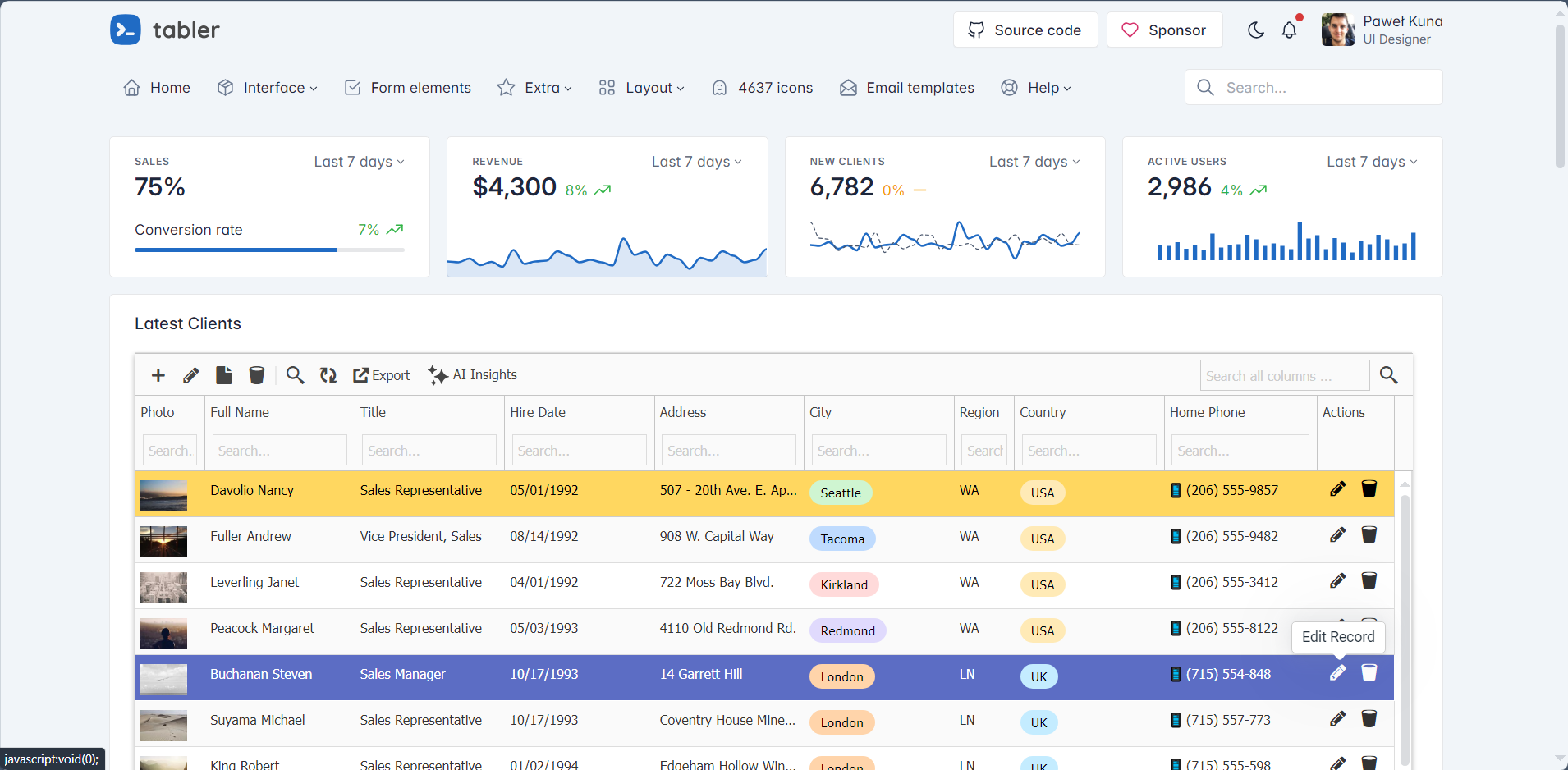
Modern server-driven UI engines and lightweight component frameworks handle DOM updates over the wire seamlessly. You can inject interactive datagrids, inline cell editing, multi-column filters, and PDF/Excel exports directly into existing PHP view templates without full page reloads.
3. “What about upgrading the underlying PHP version?”
Modernizing the UI layer first frees up engineering bandwidth. Once you eliminate frontend complexity, upgrading your codebase to PHP 8.x, refactoring raw queries to PDO, or updating database schemas becomes significantly safer and faster.
The 3-Step Strategy for Incremental UI Modernization
-
Leave Core Auth & Routing Intact: Keep your existing session management, middleware, and database connections exactly as they are.
-
Swap Static HTML Tables for Server-Driven Grids: Replace clunky, full-page-reload HTML tables with server-backed datagrid components that hook directly into your MySQL/PostgreSQL queries.
-
Refactor Business Logic Gradually: As legacy views get modern UI capabilities, refactor raw SQL queries into clean ORM queries or structured PDO statements behind the scenes.
Build Server-Driven Admin Panels in Minutes
Tired of risking full-system rewrites just to give your legacy PHP application modern UI capabilities?
GridPHP lets you drop responsive, feature-rich data tables—complete with inline editing, multi-column filtering, sub-grids, and Excel/PDF exports—directly into your existing PHP templates in just a few lines of code. No React, no API layers, and no complex JS build pipelines required.
👉 Try the Free GridPHP Demo or Explore 100+ Live Code Examples