
TL;DR: Running a Node.js build pipeline (Vite, Webpack, npm, API DTOs) just to render internal database CRUD tables introduces high dependency rot and maintenance overhead. By leveraging HTMX for DOM swapping alongside the native browser View Transitions API, you get the exact 60fps “feel” of a modern React or Vue app—instant UI feedback, zero page flashes, fluid morphing—with literally zero build steps or node_modules.
Modern web development has developed an obsession with asset build tools.
If you want to render an interactive data table with inline editing, multi-column filtering, and PDF/Excel export, standard industry advice insists you must set up Node.js, configure Vite or Webpack, install hundreds of megabytes of node_modules, write custom REST API endpoints, and wire up a client-side state manager.
For internal tools, operational dashboards, and database admin panels, this build pipeline overhead creates friction where none needs to exist.
It is entirely practical to build rich, responsive, interactive database tables directly inside your PHP views without touching npm, installing Node, or configuring a single build tool.
Welcome to Zero-Build PHP.
The Hidden Cost of the Node Build Pipeline
Installing a JavaScript build toolchain for basic data-management interfaces introduces three distinct operational taxes:
-
The Dependency Rot Tax: Six months after deploying your app, running
npm installbreaks due to peer-dependency mismatches or deprecated packages. -
The Build System Tax: When a simple UI bug needs fixing on a production server, you can’t just modify a view file. You have to run a build process, compile assets, and deploy bundle artifacts.
-
The Infrastructure Tax: CI/CD deployment pipelines take 5x longer to complete because they spend minutes fetching, caching, and building JavaScript assets.
The “Aha!” Realization: Your PHP server is already executing code and communicating with your database. You don’t need a Node compilation step on your local machine or build server just to generate HTML, handle inline table edits, and output data.
Browsers Already Solved the SPA Problem Natively
Combining HTMX (for AJAX/DOM swapping without full page reloads) with the native browser View Transitions API (for smooth, animated morphs between states) is the silver bullet that makes the JS build-tool ecosystem completely redundant for 95% of server-rendered web applications.
For years, JS framework advocates pushed SPAs using two main arguments:
- “Full page reloads feel clunky and flash white screens.”
- “Client-side routers are required for smooth, animated page/state transitions.”
Both arguments are dead.
┌────────────────────────────────────────────────────────────────────────┐
│                      THE ZERO-BUILD SPA STACK                          │
│                                                                        │
│   [Server-Rendered PHP / HTML] ──> Handled by HTMX (Targeted DOM Swap) │
│                                ──> Animated by View Transitions API    │
│                                                                        │
│   Result: Native 60fps SPA animations & zero page reloads.             │
│   Build Step: 0 seconds. Node.js required: 0 MB.                       │
└────────────────────────────────────────────────────────────────────────┘
Why JS Build Systems Are Now Pure Architectural Overhead
When the browser itself natively handles DOM diffing and screen transitions, bringing in Vite, npm, and client-side state managers creates duplicate work:
1. You’re Re-implementing Native Browser APIs in JavaScript
Client-side routers (React Router, TanStack Router) exist to intercept clicks, fetch data, and update the URL. HTMX does this natively in 14kB without client-side state mapping. Adding style="view-transition-name: ..." gives you fluid morphing effects supported natively by modern rendering engines.
2. The “Client State” Myth
In 9 out of 10 back-office or SaaS apps, “client state” is just a stale local copy of server database state. Managing state synchronization, cache invalidation (TanStack Query / Redux), and DTO mapping across network boundaries is solving a problem you created by decoupling the stack in the first place.
3. Zero-Build Does Not Mean Zero-UX
With htmx-indicator for instant loading spinners, inline validation returned directly from server logic, and native CSS view transitions, the end-user cannot tell whether your app was built by a 10-person frontend team running Vite/React or a single backend engineer returning HTML fragments from PHP.
Pre-Answering Counter-Arguments
To keep the technical debate grounded, here are the only two cases where a JS build system is genuinely justified:
-
Canvas / Heavy Off-Network Interactivity: If you are building Figma, a 3D WebGL renderer, or a digital audio workstation running complex local audio buffers in WebAssembly, build tools make sense.
-
Complex Offline-First Apps: If your application must function completely disconnected from the internet for hours and sync local IndexedDB storage back to a server later, an SPA state machine is required.
For everything else—admin tools, CRMs, ERPs, database management grids, e-commerce dashboards, and reporting software—HTMX + View Transitions + PHP delivers 100% of the SPA user experience with 0% of the build pipeline maintenance.
Practical Implementation Patterns
Depending on your framework requirements, implementing zero-build server-driven tables generally follows three main paths:
-
Framework-Native State (Laravel/Symfony): Utilizing tools like Livewire or Symfony UX to bind server state directly to Blade/Twig components.
-
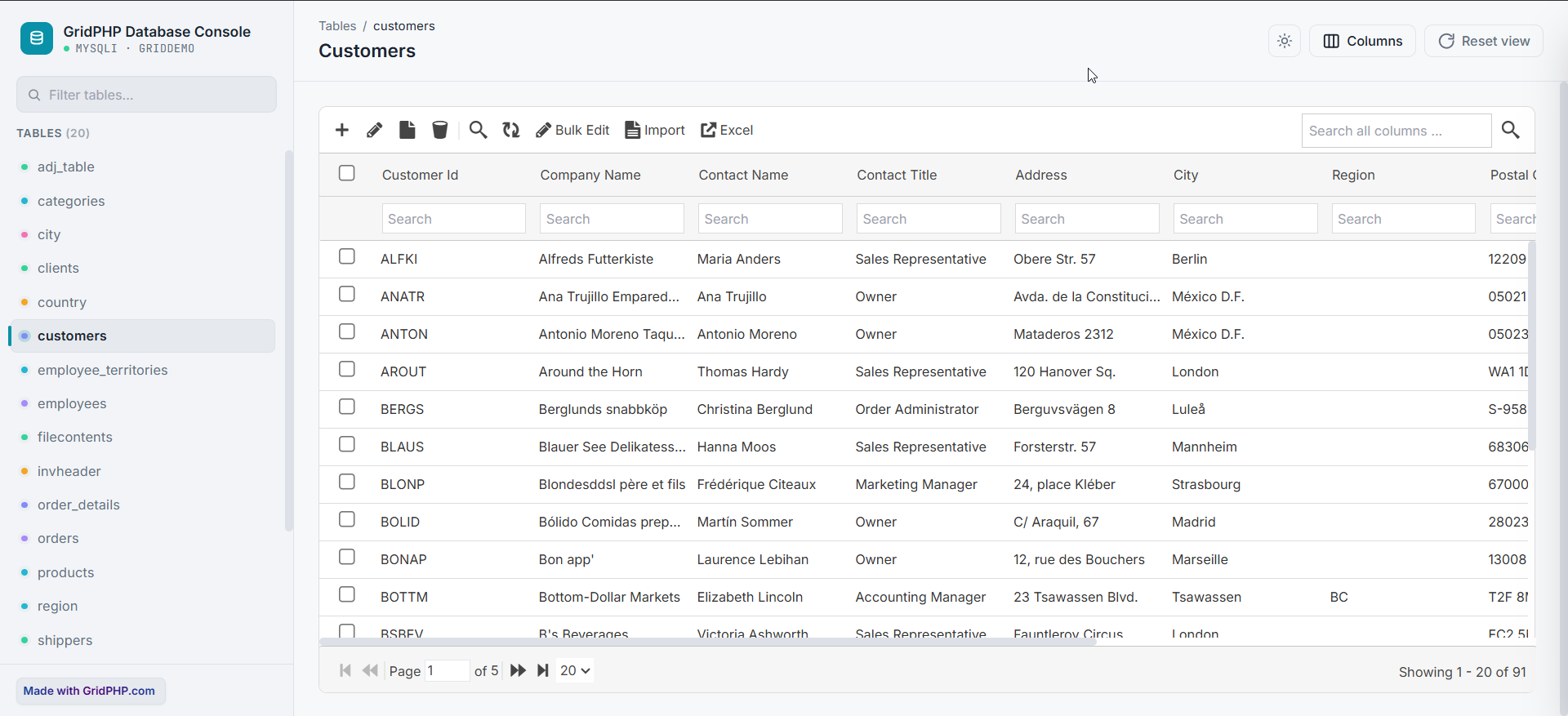
Standalone Server Grids: For custom PHP applications, legacy codebases, or raw PDO/MySQL setups, tools like GridPHP allow engineers to map database queries directly to editable UI controls without managing frontend dependencies.
-
Lightweight DOM Diffing: Combining standard PHP view rendering with lightweight libraries like HTMX or Alpine.js for targeted page-fragment updates.
By keeping your UI layer close to your database logic, you eliminate build-chain complexity, cut development time, and keep your application stack maintainable for years to come.